

insights
Learning from data and practice
Practical research implications, perspectives from experiences, and emerging practices to generate insights organizations can use.

research
Research-informed insight report
Results from sense-making dialogues and studies translated into practical implications for organizations to address their challenges.

collective sense-making
Dialogue that generates new perspectives
Labs, co-creation sessions, and networking dialogues to explore complex challenges and identify consensus using research methods.

/ about us
Why This Institute Exists
Organizations today operate in environments marked by rapid technological change, uncertainty, and increasing performance demands. Leaders must often make decisions without clear answers.
Questions related to learning, performance, well-being, and the responsible use of emerging technologies such as artificial intelligence are becoming central to how organizations evolve.
The Institute for Sustainable Human Performance is an independent research–practice platform that brings together researchers and professionals from different disciplines to explore complex questions about learning, decision-making, and sustainable performance. Through structured dialogue, collaborative inquiry, and research-informed synthesis, we transform important questions into insights that inform both practice and future research.

/ HOW IT WORKS
How the Institute Works
Each semester, the Institute explores an Open Question through a structured process that combines insights, dialogue, and research:
01. Open Question → 02. Learning from Data & Practice → 03. Collaborative Sense-Making → 04. Research & Suggestions for Practice

/ 01
Open Question
The Institute publishes or receives an Open Question exploring a topic related to work, learning, AI, and sustainable performance.

/ 02
Learning from Data & Practice
Contributors share insights and experiences related to the question, drawing from research and professional practice.

/ 03
Collaborative Sense-Making
Professionals and organizations engage in Labs, Co-Creation Projects, and Networking Dialogues to explore the question together.

/ 04
Research & Suggestions
The Institute use research methods to generate practical suggestions and insights that organizations can test and adapt in their own context.

/ WHAT IS AN OPEN QUESTION
From Open Questions to Practical Insights
Many of the most important organizational challenges begin with open questions.
Each semester, the Institute explores one through research, practice, and collective sense-making.
Organizations can also propose their own Open Question. We then help explore it through research insights or collaborative learning processes.

How Structured AI Use Supports Critical Thinking and Learning
Contributor:
Dr. Andreea Nicolau
Research conducted in Germany, Switzerland, and the United Kingdom shows that how people use generative AI can either weaken or strengthen their thinking. Researcher Michael Gerlich found that when people use AI without guidance, they tend to rely on it without improving the quality of their reasoning. In contrast, when they are encouraged to question, evaluate, and refine AI-generated responses, they engage more deeply and produce better results. These findings directly inform our current research question: How can organizations guide the use of AI to strengthen learning and development? The study suggests that AI does not automatically improve learning or performance. Without clear guidance, employees may increasingly rely on AI for tasks that previously required analysis and reflection, thereby weakening critical thinking and slowing the development of expertise. When AI use is structured, however, it can become a tool that supports deeper thinking and capability development.
Implications for practice:
Encourage employees to question and refine AI-generated responses rather than accept them at face value.
Build AI literacy so people understand both the benefits and limitations of AI.
Integrate AI into work in ways that preserve critical thinking and human judgment.
Use structured prompts as a simple and cost-effective way to support responsible AI use.
Source: Gerlich, M. (2025). From offloading to engagement: An experimental study on structured prompting and critical reasoning with generative AI. Data, 10(11), Article 172.

From AI Anxiety to Capability: Building Confidence Through Practice
Contributor:
Magdalena Irina Vrajitoru
“AI can become a catalyst for sustainable performance.” This article explores how continuous AI literacy, role-specific workshops, and safe spaces for experimentation can build employees’ confidence and capability. The accompanying Institute Reflection connects these practices to research showing that AI adoption becomes more sustainable when organizations move beyond awareness and create supportive opportunities for employees to experiment, learn, and integrate AI into everyday work.

Coaching & Mentoring for GenAI-Enabled Work: Practitioner Playbook
Eindhoven University of Technology
December 2, 2026
89.99$
A Hybrid Co-Creation Project for Experienced Workplace Coaches and Mentors
Join fellow practitioners in shaping practical approaches to support clients in GenAI-enabled work and be acknowledged as a contributor to the Practitioner Playbook
Meet Our Collaborators
/ THIS SEASON'S QUESTION
How can organizations guide the use of AI so that learning, development, and sustainable performance are supported?
Learning from Data
AI reveals patterns in organizational data. Analyze cases to spot learning accelerators vs. blind spots.
Learning from Practice
Test AI in real workflows. Identify gaps between tools and human needs through rapid experiments.
Sense Making Labs
Prototype AI decision frameworks. Link data to strategies via facilitated experiments.
Research
Dr. Dadi Chen
Associate Professor and Deputy Head of School
Associate Professor and Deputy Head of School at Wittenborg University of Applied Sciences, the Netherlands. Holding a PhD in Education from Leiden University, he specialises in intercultural communication, educational management, and AI-driven curriculum design.
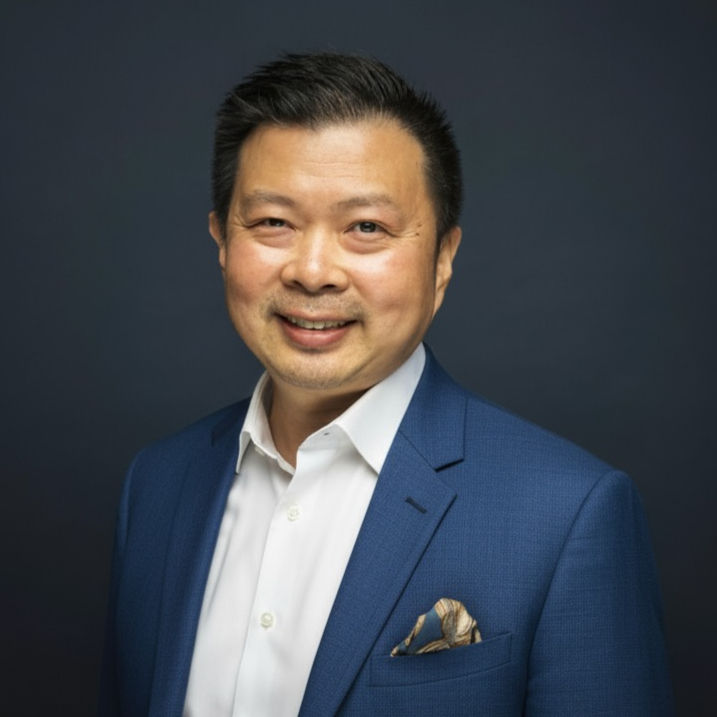
Dr. Andreea Nicolau
Researcher on AI, Learning & Sustainable Performance, Executive Coach, Lecturer
Organizational behavior professional with 25+ years in leadership, coaching, teaching, and research. Focuses on leadership, performance, and human–AI interaction, offering evidence-based coaching and consulting for organizational effectiveness.

Organizational Practice
Laura Balaci
Executive & Leadership Coach | Bigger Roles • Leadership Impact • Change & Complexity
With over 20 years of international leadership experience and 8+ years coaching executives globally, she combines evidence-based practice with reflective approaches to leadership, learning, and change, helping leaders strengthen executive presence, navigate transitions, and achieve sustainable growth.

Mitchell W. Uzeel
Human Resources Policy Advisor and PhD candidate, Eindhoven University of Technology
With over 10 years of international HR experience, Mitch is on a mission to modernise HRM standards. Combining evidence-based practice with expertise in strategic HR, fairness, motivation, employee experience, and AI in HR, he advocates for more effective and human-centered organizations.

Mark Ringlever
Technology Project Manager at a global leader in Floating Production Storage & Offloading Systems
With more than 30 years of experience in offshore engineering, he has led multidisciplinary engineering teams and complex offshore projects. His expertise spans electrical and instrumentation systems, technology management, and the development of engineering capability in high-performance environments.

Ovidiu Tunaru
Managing Director. Business Executive Officer, Nestlé Professional South East Europe, New Business Development
A C-level executive with extensive international experience in commercial leadership and business transformation. He specializes in translating strategy into action, leading organizational change, and developing high-performing teams that deliver sustainable business performance.
_edited.jpg)
Magdalena Irina Vrajitoru
Senior HR Consultant| HR expert in organizational development | Mentor | Business Coach
An experienced HR and organizational development professional with 20+ years in leading multinational companies. Internationally certified by EMCC, GCDF, and CIPD, she brings expertise in strategic HR, talent management, coaching, change management, employee engagement, performance, and organizational development across cultures.

James Gamgee
Learning & Development Specialist, Coaching, Leadership & Trust Researcher and Consultant
Independent consultant, coach, and speaker specializing in coaching psychology, leadership development, and workplace trust. He holds MSc degrees from the University of Derby and Heriot-Watt University, and explores how coaching, leadership, and trust support employee well-being and sustainable performance.

Andreea Gheorghita
Professional Certified Coach (PCC) and Associate Certified Team Coach (ACTC)
Experienced leadership coach with 9+ years working with leaders and teams across multinational organizations and industries. EMCC Senior Practitioner and ESIA accredited, using systemic, evidence-based approaches to support transitions, collaboration, and sustainable leadership.

Arian Aryanfard
Customer Solutions Manager, Chartered Manager Fellow
Customer Solutions Manager at Festo UK & Ireland and a Chartered Manager Fellow (MSc, CMgr, FCMI). With over a decade of experience in industrial automation, technology, and service leadership, he leads cross-functional teams that drive innovation and transform complex engineering challenges into scalable, sustainable solutions.

Ana-Maria Dospinescu
Senior Electrical Engineer, Wind projects, Quality Management, High-Voltage Systems
Passionate about AI as a tool for critical thinking, continuous learning, knowledge sharing, and responsible innovation. She is committed to fostering collaboration, knowledge sharing, and the responsible use of technology to strengthen both individual expertise and organisational performance.

Tyrone Peters
Principal Solution Architect, Enterprise Technology & Innovation Advisor, MBA Candidate
Principal Solution Architect at a global software organization and an MBA candidate at the University of Sydney. With over 15 years of experience in enterprise technology and financial services, he helps organizations design innovative solutions that align technology with business transformation and long-term value.

Cristina Cristescu
AI Integration Specialist, Founder @ Witfuses.com, Executive Coach
Teaches applied AI, designs AI-enhanced learning pathways, and coaches leaders on future-fit leadership with AI adoption to support sustainable performance. Researcher with publications in Chaos, Solitons & Fractals and Physica A.

Rolf Pfeiffer
Managing Partner, International Executive Development Leader, Researcher
Executive advisor, managing partner, and PhD candidate at Vrije Universiteit Amsterdam. He chairs the board of Commonpurpose Germany and serves as vice-chair of the British Chamber of Commerce in Germany. Combining consulting and business experience with a pragmatic, impact-driven approach, he helps leaders translate strategy into action.

Alexandra Kogalniceanu
HR Operations Leader, Payroll, HR Systems & People Services
HR Operations and People Services leader with experience across both GBS and business-side HR environments. She is curious about people, their stories, and their potential. Believes growth starts with awareness and that change becomes meaningful when people feel seen, understood, and supported.

Monica Stamate
Legal for Digital Banking, LL.M Tech Law, AI, Data & Consumer Protection
Banking and legal professional with expertise in data protection, consumer rights, digital transformation, and AI governance. Combining legal insight with business understanding and process innovation, she is interested in how organizations can implement emerging technologies responsibly while supporting trust, adaptation, and sustainable growth.

Cristina Maria Ionescu
Advisory Associate Partner, Innovator in BrainFitness, Mindfulness Mentor
Business leader and human development practitioner exploring the intersection of neuroscience, executive wellbeing, technology, AI, mindfulness, and vertical development in modern organizational life. With 22 years of Big4 leadership experience, she advocates for more human-centered and sustainable ways of leading and evolving.

James E. Varnham
General Manager EMEA, AI Readiness Strategist, HR & Workforce Transformation Advisor
Human-Centered AI Advisor and serves as General Manager for EMEA at Sarder Inc., a global AI Readiness Company. Having spent 25 years in the learning and workforce development space, James brings a unique human-centered approach when guiding organizations from early exploration to confident, responsible AI adoption.

Luminita Rusu
HR & Development Consultant, Clinical Psychologist, and Senior Executive & Team Coach
Supports leaders and organisations globally to navigate complexity with clarity, focusing on sustainable performance, leadership development, and human-centered growth through evidence-based and holistic mind–body approaches.

Adriana Țuluca-Marina
Specialist Learning & Development, Instructional Designer, EMCCmentor
Focused on supporting growth and transformation. Works at the intersection of education and organizational development, with a strong interest in psychological safety, reflective practice, and integrating AI to enhance human learning and long-term capability.

Dr. Dadi Chen
Associate Professor and Deputy Head of School
Associate Professor and Deputy Head of School at Wittenborg University of Applied Sciences, the Netherlands. Holding a PhD in Education from Leiden University, he specialises in intercultural communication, educational management, and AI-driven curriculum design.
Corina Irsik
Coach, Mentor, Artist, Researcher
Coach, mentor, artist, and researcher with 25 years of experience spanning multinational projects and transition management, and freelance practice in arts and education. Her work sits at the intersection of trust-based leadership, self-managed organizations, change leadership, participatory arts, and AI-assisted reflection.

Dr. Andreea Nicolau
Researcher on AI, Learning & Sustainable Performance, Executive Coach, Lecturer
Organizational behavior professional with 25+ years in leadership, coaching, teaching, and research. Focuses on leadership, performance, and human–AI interaction, offering evidence-based coaching and consulting for organizational effectiveness.
Meet Our Collaborators
Alex Tran
Chief Scientific Officer
Alex brings 15+ years of experience in applied research, overseeing complex testing and validation programs across biotech, environmental, and materials science.

Maya Chen
Director of Laboratory Operations
Maya leads our lab systems and infrastructure—ensuring every workflow is scalable, compliant, and optimized for speed and scientific accuracy.

Andreea Nicolau
Founder & Researcher
Andreea connects research teams with the right lab support—shaping partnership strategy and aligning cross-functional efforts with measurable scientific goals.

Clara Jennings
Principal Investigator, Biotech & Pharma
With a background in molecular biology and regulatory trials, Clara guides clients through clinical validation, assay design, and FDA-aligned reporting.

Jamie Liu
Senior Advisor, Applied Materials
Jamie advises on everything from tensile testing to lifecycle simulations—bridging the gap between lab performance and industrial application.

Lina Okoro
Client Solutions Lead
Lina ensures a seamless research experience from first consultation to final delivery, translating complex data into business-aligned insights.

Our Partners


/ FAQ
What You Might Want to Know
Discover how the Institute supports organizations and professionals in exploring complex Open Questions through research, dialogue, and co-creation, and learn how you can participate or contribute your expertise.